


Greenwich CT Home Prices Are Defying the National Slowdown in 2026
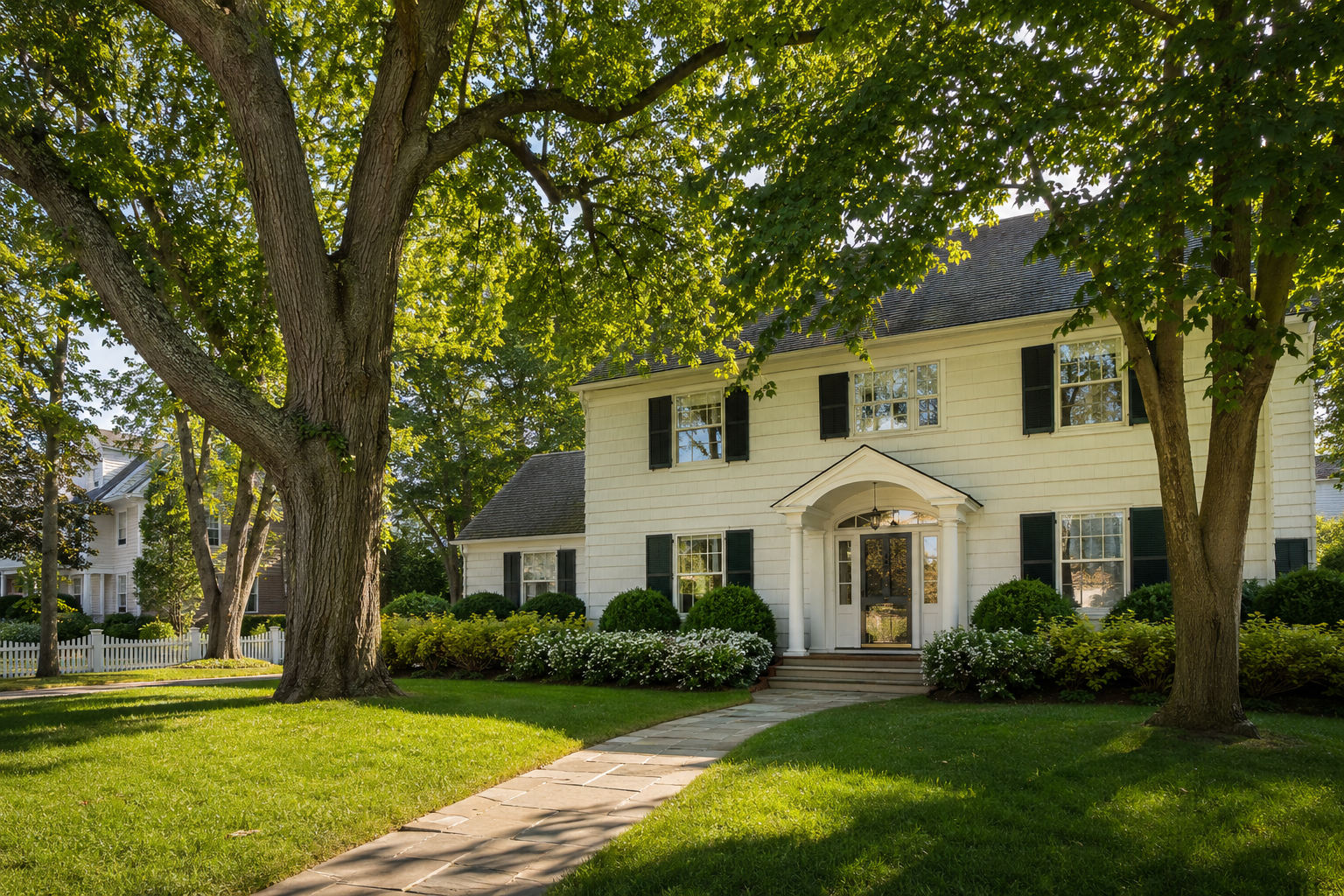
By the national numbers, the U.S. housing market is treading water. In Greenwich, the story is different.
The S&P Cotality Case-Shiller Index released June 30, 2026, showed U.S. single-family home values rose just 0.8% in April compared to a year ago. With inflation running at 3.8%, American homeowners have now seen their housing wealth erode in real terms for 11 consecutive months. That's the national picture.
Greenwich isn't in the national picture. It's in a different category entirely.
How the Northeast Is Leaving the Rest of the Country Behind
The Case-Shiller index tracks 20 major U.S. metros, and the pattern in April 2026 is striking. Chicago led all markets with a 6.5% annual gain. New York followed at 3.8%. Meanwhile, dozens of Sun Belt and Western metros posted flat or negative numbers.
Greenwich sits in the New York metro's gravitational pull. Fairfield County residents commute to Manhattan, maintain business ties there, and often treat Greenwich as a primary-residence upgrade from a city apartment. When the New York metro outperforms, Greenwich tends to run alongside it, or ahead.
The year-to-date 2026 data confirms what local agents have seen on the ground since January.
What Is Actually Happening in the Greenwich Market Right Now?
The Greenwich Association of Realtors Q1 2026 report tells the story clearly.
Single-family closings jumped 17.6% year-over-year, from 74 in Q1 2025 to 87 in Q1 2026. Homes sold in an average of 75 days, down 31% from the prior year. The average sale-to-list price ratio hit 103.4%, meaning the typical Greenwich home sold above its asking price. Inventory contracted to 91 active listings, 40% fewer than a year earlier.
The condo segment showed even sharper movement: 52 closings (up 40%), a median price of $1,516,700 (up 32%), and total condo volume of $90.8 million, up 75% year-over-year.
And the year-to-date numbers show the trend has held well beyond the first quarter. Across Greater Greenwich from January 1 through July 1, 2026, 141 homes sold (up 3% from the same period in 2025) at a median sale price of $4.4 million, up 10% year-over-year. Median price per square foot climbed 11% to $885, and the median home went under contract in just 21 days. That's not a sluggish market. That's a compressed, competitive one where qualified buyers move fast.
What's Driving Greenwich's Outperformance?
Three factors are doing most of the work: constrained supply, persistent demand from the NYC and Wall Street corridor, and the lasting structural shift toward hybrid work.
Inventory in Greenwich has been running 40% below year-ago levels. When fewer homes come to market and buyer demand holds steady, prices don't stall. They push higher.
The buyer profile has also evolved. Many current purchasers are hybrid workers who need a home that functions as a full office, not just a weekend retreat. High-speed fiber connectivity, dedicated workspace, outdoor living areas, and top-tier school districts matter now the way commute time used to. Greenwich scores well on all of them. The Brunswick School, Greenwich Country Day, and the Greenwich public school system rank among Fairfield County's best, a consistent pull for families relocating from the city.
Meanwhile, the migration of financial firms and hedge funds from Midtown Manhattan to Stamford and Greenwich, which accelerated during the pandemic years, has created a more permanent local professional class. These buyers aren't speculating. They're putting down roots.
Which Greenwich Neighborhoods Are Seeing the Most Competition?
The 2026 year-to-date numbers (January 1 through July 1) make it unambiguous: Old Greenwich and Cos Cob are the two fastest-moving neighborhoods in town.
In Old Greenwich, 34 homes have sold year-to-date at a median price of $3.5 million, up 13% year-over-year, with a median of just 9 days on market, 14% faster than a year ago. The average sale price jumped 38% to $4.4 million, pulled upward by strength at the top of the market, and median price per square foot rose 8.4% to $1,035, the highest in Greenwich.
Cos Cob is moving nearly as fast. The 17 homes that have sold so far in 2026 went under contract in a median of 12 days (down 20% from 2025), with both average and median sale prices at $2.2 million, up 6% year-over-year, and price per square foot up 4.3% to $742. The 39% drop in the number of sales isn't a demand story; it's a supply story. There simply weren't enough Cos Cob homes to sell, and the ones that listed moved almost immediately.
Riverside, positioned between Old Greenwich and central Greenwich, posted the strongest price growth in town: the median sale price rose 20% to $3.8 million on 38 sales, itself up 19% year-over-year, with price per square foot up 5.6% to $945. Riverside's median of 58 days on market runs longer than its neighbors, partly a function of higher price points, but the volume and price gains show families are still competing hard for its walkable character and access to the Riverside school district. Glenville continues to attract first-move-up buyers with a median closer to $1.685 million, a lower entry point with the same Fairfield County fundamentals.
The backcountry, Belle Haven, and mid-country sections remain active for buyers looking for acreage and privacy. The luxury market above $5 million has stayed consistent in those areas, and it shows in the town-wide numbers: the average Greater Greenwich sale price has reached $5.1 million year-to-date.
Does the National Slowdown Signal Any Risk for Greenwich?
It's a fair question. When national home values erode in real terms for 11 straight months, does that eventually reach Greenwich?
The short answer is: it hasn't yet, and the structural reasons suggest it won't follow the same path. Greenwich is not a speculative market driven by investor flipping or pandemic-era relocations that have reversed. Demand here is rooted in employment geography, school quality, and the finite supply of single-family homes in a town with strict zoning and limited developable land.
The markets that are declining, many Sun Belt metros that saw explosive pandemic-era growth, have different risk profiles. They built aggressively, attracted speculative buyers, and now face supply gluts. Greenwich has the opposite problem: not enough homes, not enough new construction, and a buyer pool that keeps showing up.
What This Means If You're Buying in Greenwich in 2026
Expect competition. Homes are selling above asking in most price bands, and in the most sought-after neighborhoods the timeline is measured in days, not months: a median of 9 days on market in Old Greenwich and 12 in Cos Cob year-to-date in 2026. Buyers with pre-approval in hand, flexible terms, and a clear sense of their target neighborhoods close faster.
The strongest opportunity right now may be in the condo segment. The 32% jump in median condo prices to $1,516,700 reflects a market that was undervalued relative to single-family homes. For buyers who don't want to compete in the $3.5 million-plus single-family market of Old Greenwich and Riverside, a well-located condo in central Greenwich or Old Greenwich offers a realistic foothold. On the single-family side, Cos Cob's $2.2 million median remains the most accessible entry point among the town's fastest-moving neighborhoods.
What This Means If You're Selling in Greenwich in 2026
You're in a favorable position, but pricing discipline still matters. The 103.4% sale-to-list ratio reflects homes priced correctly. Homes that are overpriced relative to recent comparables sit longer than sellers expect.
With inventory 40% below year-ago levels, sellers who price accurately are seeing multiple offers, and in Old Greenwich and Cos Cob, correctly priced homes are going under contract within two weeks. Preparation matters too. Buyers in this market are sophisticated. Deferred maintenance, dated kitchens, and unclear floor plans get priced in aggressively by buyers' agents. Homes that show well and disclose cleanly move faster.
Key Takeaways
- The April 2026 Case-Shiller Index shows the New York metro up 3.8% annually, far outpacing the 0.8% national average, while Sun Belt and Western markets stagnate or fall.
- Year-to-date through July 1, 2026, Greater Greenwich recorded 141 single-family sales (up 3%), a $4.4 million median sale price (up 10%), an 11% rise in price per square foot to $885, and a median of just 21 days on market.
- Old Greenwich and Cos Cob are the market's fastest-moving neighborhoods, with median days on market of 9 and 12 respectively and year-over-year price gains across the board.
- Riverside posted the strongest price growth in town: a 20% jump in median sale price to $3.8 million on 19% more sales.
- The structural drivers of Greenwich demand (limited inventory, NYC employment proximity, school quality, hybrid work adoption) are fundamentally different from the factors driving declines in speculative Sun Belt markets.
- Sellers with well-prepared, correctly priced homes are seeing multiple offers; buyers need pre-approval and clear priorities to compete.
Frequently Asked Questions
Are Greenwich CT home prices going up or down in 2026?
Greenwich home prices are trending up in 2026. Year-to-date through July 1, the median single-family sale price across Greater Greenwich reached $4.4 million, up 10% from the same period in 2025, and median price per square foot rose 11% to $885. Homes are consistently selling above their listed asking price, which signals underlying price strength.
Why are Greenwich homes selling above asking price?
Inventory is down 40% from a year ago, which means far more qualified buyers than available homes. When multiple buyers compete for the same property, offers come in above list. The Q1 2026 average sale-to-list ratio of 103.4% reflects that pattern across most price segments, and it's most acute in Old Greenwich and Cos Cob, where the median home sells in under two weeks.
How does Greenwich compare to the national housing market in 2026?
The national Case-Shiller index showed only 0.8% annual home value growth in April 2026. With inflation at 3.8%, real housing wealth is declining nationally for an 11th consecutive month. Greenwich is an exception. The New York metro was up 3.8%, and Greenwich's local data is stronger still: a 10% rise in the median sale price and an 11% rise in price per square foot year-to-date in 2026.
Which Greenwich neighborhoods are the most competitive to buy in?
Old Greenwich and Cos Cob currently have the fastest sales pace, with median days on market of just 9 and 12 respectively, year-to-date in 2026. Riverside is also highly competitive, posting a 20% year-over-year jump in median sale price to $3.8 million. Glenville offers a lower median entry point (around $1.685 million) with similar market dynamics.
Is now a good time to sell a home in Greenwich?
For sellers with well-prepared, accurately priced homes, conditions in 2026 are favorable. Low inventory, strong buyer demand, and above-list sale prices are working in sellers' favor. The key variables are pricing discipline and presentation. Correctly priced homes are moving; overpriced listings are sitting longer than expected.
Ready to buy or sell in Greenwich? Contact the Metalios Team at Houlihan Lawrence for a neighborhood-by-neighborhood read on what the data means for your specific move, whether you're looking at Old Greenwich, Riverside, Cos Cob, or Greater Greenwich.
Check out this article next
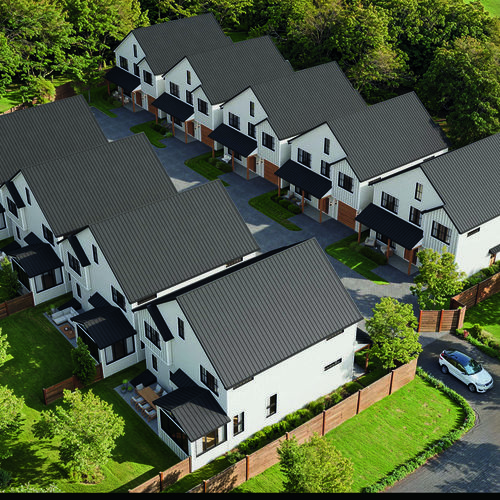
The Cottages at Wire Mill | New 55+ Community in Stamford, CT
The Metalios Team introduces The Cottages at Wire Mill, a new gated 55+ community of single-family homes in North Stamford, CT — featuring dual primary…
Read Article